The Short Answer
The best Arabic and Middle East house playlists on Spotify in 2026 take a normal house groove and lay Middle Eastern sound on top - the oud, the hand drums, the Arabic melody. MIDDLE EAST HOUSE 2026 by Vibe Agency leads for a focused, hand-picked collection; Middle Eastern Electronics by Gobi Desert Collective is the best desert-festival pick; Arabic Chill Out & Lounge 2026 by Chakra Records covers the slower, softer side. This guide ranks the five worth saving.
What Arabic & Middle East House Actually Is
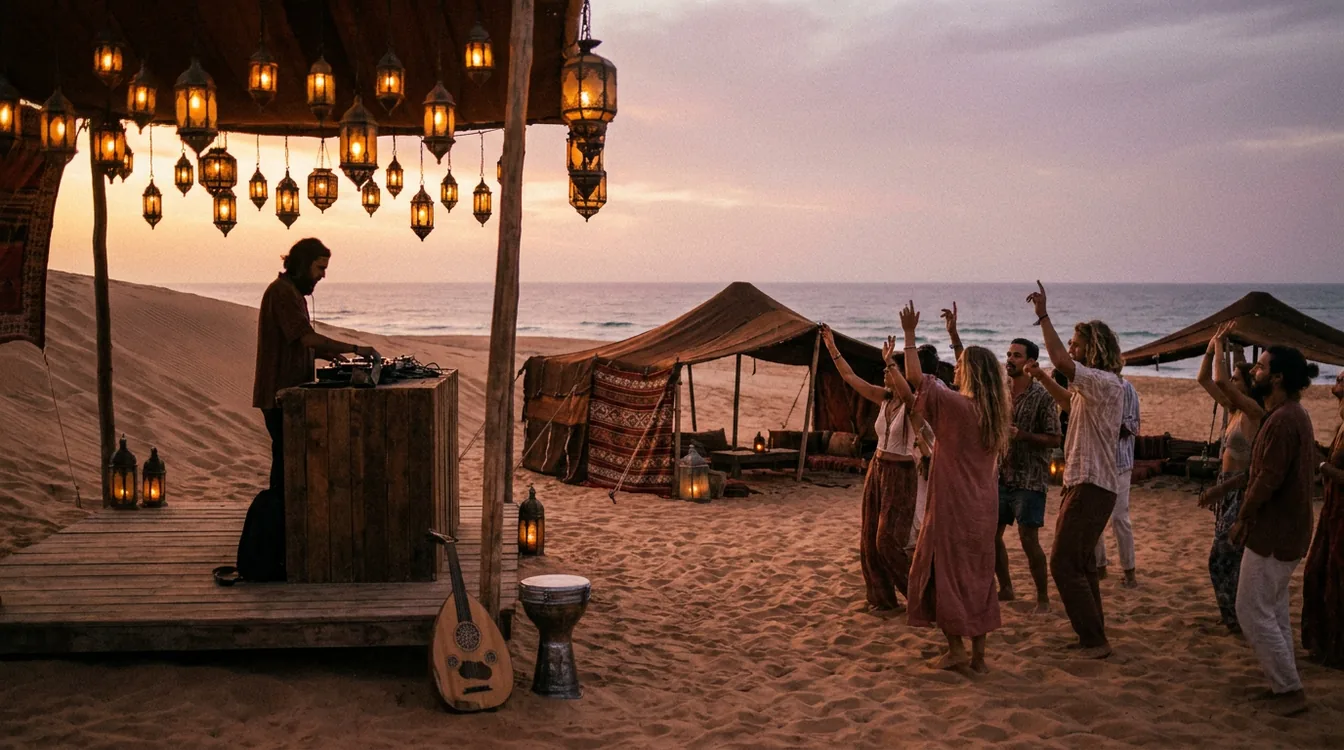
Picture a normal house track - that steady, four-beat dance pulse you hear in any club. Now imagine someone laying a slow, soulful Arabic string melody over the top of it, and swapping some of the drums for a warm hand drum you might hear at a desert wedding. That is Arabic house. Most people also call it Middle East house or oriental house. It is the same house music you already know, dressed in the sound of the East.
It tends to run a little slower than club house - usually between 110 and 124 BPM (beats per minute, a measure of a track's speed). That slower pace is the point. It leaves room for the melody to breathe and for the percussion to feel hand-played rather than machine-tight. The result is the most cinematic, emotional corner of the whole house family - the kind of music that fits a sunset more than a 2am peak.
If you just want to press play and feel it, start with the first playlist below. If you want to understand why it sounds the way it does - the instruments, the scales, the history - that is all further down the page.
The 5 Best Arabic & Middle East House Playlists on Spotify in 2026
1. MIDDLE EAST HOUSE 2026 by Vibe Agency
76 tracks · Independent curation · Updated regularly · 110-124 BPM
This is the playlist we curate, and it is built to be the single cleanest entry point into the sound. MIDDLE EAST HOUSE 2026 sits where deep and organic house meet Middle Eastern melody - Nicola Cruz, Stavroz, Thylacine, Ampermut, and the wave of producers folding oud lines and darbuka rhythms into 120 BPM frameworks. The sequencing follows a listening arc rather than a release feed: warm openers, a mid-set lift, atmospheric closers. It is curated by BYAS (Yasin Borry), a Belgian-born DJ and producer, and it is the playlist DJs reach for worldwide when they want to blend Eastern textures into an afro or deep house set. Start here, then branch out into the peer picks below.
2. Middle Eastern Electronics by Gobi Desert Collective
56 tracks · Independent curation · Desert-festival focus
Gobi Desert Collective is one of the most credible independent voices in the organic and desert-electronic world, and this playlist is their Middle Eastern chapter. Middle Eastern Electronics leans into the Burning Man and Tulum sound - Viken Arman, Cafe De Anatolia, Ampermut, and Gobi's own productions - where the oriental melody meets a slower, ceremonial groove. Gobi are peers and friends of the Vibe Agency network across the same organic and ethnic-house territory, and the two playlist worlds frequently surface the same producers within a release cycle of each other. If you want the desert-festival end of Arabic house, this is the one to follow.
3. Burning Man 2026 by Gobi Desert Collective
66 tracks · Independent curation · Ethnic / organic / desert house
Gobi's flagship festival playlist is broader than pure Middle East house - it spans ethnic house, organic house, desert house, afro house and downtempo - but it belongs here because the Anatolian and Arabic crossover sits right at its centre. Burning Man 2026 is one of the largest independent house playlists outside the editorial and label tiers, and it works as a wider map of the territory Arabic house lives in: the slow, melodic, percussion-forward sound that defines the global desert-festival circuit. If the focused Middle East playlists leave you wanting the full picture, this is the panorama.
4. Arabic Chill Out & Lounge 2026 by Chakra Records
100 tracks · Label curation · Downtempo / lounge focus
Chakra Records run one of the most consistent Arabic-leaning catalogues on Spotify, and Arabic Chill Out & Lounge 2026 is their softer, slower collection - relaxing downtempo with Arabic vocals, oud and lounge-tempo grooves. Suray, Sonoismo, Idin Gorji and the wider Chakra roster share rotation here. This is the playlist for the early hours of a sunset session, a dinner service, or a cooldown after the peak. Where the first three playlists are about movement, this one is about atmosphere - it is the most relaxed end of the Arabic house family, and a clean palette-cleanser between the bigger sets.
5. Dubai Nights Arabic House by Arabic Sound
100 tracks · Independent curation · Club / vocal focus
The most club-forward pick on the list. Dubai Nights Arabic House captures the Gulf nightlife sound - bigger drums, Arabic vocal hooks, and the kind of remix-heavy energy you hear in the rooftop and beach clubs of Dubai and Abu Dhabi. It runs hotter and more vocal than the organic playlists above, which makes it a useful counterweight: when a session needs lift rather than drift, this is where Arabic house brings the energy up. A good last stop for anyone who wants to hear how far the genre stretches, from desert downtempo to Gulf peak-time.
"Middle East house is the most cinematic corner of the house family. An oud line over a deep house groove changes the whole room - it slows people down, it makes them listen. We curate MIDDLE EAST HOUSE 2026 for that exact moment: the sunset hour when the percussion is warm and the melody carries the weight."
— BYAS, Vibe Agency founder & curator
The Instruments Behind the Sound
What makes Arabic house instantly recognisable is not the beat - it is the instruments laid over it. A few show up again and again, and once you can name them you start hearing them everywhere.
The oud. A pear-shaped, fretless lute that is the backbone of Arabic music. Because it has no frets, a player can slide between notes in a way a guitar cannot, which is where that liquid, vocal-like melody comes from. In Arabic house, the oud usually carries the lead line - the part that gives you goosebumps.
The darbuka. A goblet-shaped hand drum, also called a doumbek, held sideways and played with the fingertips. It produces both a deep low note and a sharp crisp tap, and that contrast is what gives Arabic house its hand-played, dancing rhythm instead of a stiff machine beat.
The ney and the bouzouki. The ney is a breathy reed flute that adds the airy, meditative top layer; the bouzouki is a long-necked string instrument that adds a brighter, plucked texture. Producers sample or replay all of these over electronic drums and pads.
The scales. The deeper reason it sounds “Eastern” is the scales. Arabic and Anatolian music uses note patterns that differ from the standard Western major and minor scales most pop and house is built on - including notes that sit between the keys of a piano. That is the technical source of the mood: it is not just the instruments, it is the actual notes they play.
How We Chose These Playlists
We listened across dozens of Arabic and Middle East house playlists before settling on these five. Each was judged on four things.
A real point of view. The genre is crowded with auto-generated “top 100” playlists that simply scrape whatever is trending. We favoured collections with a human behind them - a curator who sequences tracks for a feeling, not just a follower count.
Coverage of the full range. Arabic house stretches from soft desert downtempo to Gulf club energy. A good shortlist needs both ends, which is why the five above move from organic and ceremonial (Vibe Agency, Gobi) through lounge (Chakra) to club-forward (Arabic Sound).
Freshness. The genre is growing fast, and the best playlists rotate new producers in rather than freezing in place. Every pick here is actively maintained for 2026.
Honesty about peers. Two of the five are by Gobi Desert Collective and one by Chakra Records - curators we respect and consider peers, not competitors. We feature them because they genuinely own a corner of this sound, not as a favour. A good guide points you to the best music, wherever it lives.
Where Arabic House Is Growing
For years Arabic house lived almost entirely in two places: the Middle East itself, and the global desert-festival circuit - Burning Man, Tulum, and the All Day I Dream and Cafe De Anatolia events that travel between them. That is still its heartland. But the sound has spread far past it.
The crossover is now everywhere melodic and afro house live. Beach clubs and open-air parties across the world have started weaving Middle Eastern textures into their sets - the oud and the darbuka sit naturally next to the African percussion that already dominates those rooms. That crossover is exactly the space the Vibe Agency network works in, and it is why afro house and organic house listeners so often end up here too. Arabic house is no longer a regional niche; it is a colour every melodic-house DJ now reaches for.
Frequently Asked Questions
What is Arabic house music?
Arabic house, also called Middle East house or oriental house, is a sub-style of house music that layers Middle Eastern instruments and scales over a house foundation. Expect the oud (a fretless Arabic lute), the darbuka (a goblet hand drum), the ney flute, and Arabic or Anatolian vocal samples sitting on top of a 4/4 deep or organic house groove, usually between 110 and 124 BPM. It is the most cinematic, melody-led corner of the house family.
What is the best Arabic house playlist on Spotify in 2026?
For a focused, human-curated Middle East house collection, MIDDLE EAST HOUSE 2026 by Vibe Agency (76 tracks) is the strongest entry point. Middle Eastern Electronics by Gobi Desert Collective is the best peer pick for the desert-festival end, and Arabic Chill Out & Lounge 2026 by Chakra Records covers the slower downtempo side.
What BPM is Arabic and Middle East house?
Most Arabic and Middle East house sits between 110 and 124 BPM. The organic and downtempo end runs slower (110-118 BPM) with hand percussion and acoustic textures, while the deeper, more club-focused tracks reach 120-124 BPM. The slower tempo is part of the genre's identity - it leaves space for the oud melody and the darbuka rhythm to breathe.
Which instruments define the Middle East house sound?
The oud (a fretless lute), the darbuka or doumbek (a goblet hand drum), the ney (a reed flute), and the bouzouki are the signature instruments. Producers sample or replay these over electronic drums and synth pads, often using Arabic or Anatolian scales - which differ from Western major and minor scales - to create the recognisable oriental atmosphere.
How do I get my Arabic or Middle East house track on a playlist?
Submit directly to independent curators who already run the genre. Vibe Agency accepts Middle East and oriental house submissions at vibeagency.net/submit. Approach peer curators like Gobi Desert Collective and Chakra Records through their own channels. For Spotify editorial reach, pitch through Spotify for Artists at least seven days before your release date.
Is Arabic house the same as organic house?
They overlap heavily but are not identical. Organic house is defined by acoustic instrumentation and a slower, ceremonial feel. Arabic or Middle East house is defined by the specific Middle Eastern instruments and scales - oud, darbuka, Anatolian melody. A lot of Arabic house is also organic house, but Arabic house can lean deeper or more club-focused while organic house always stays soft and acoustic.
Found your sound? Here is where to keep listening.
Listen: MIDDLE EAST HOUSE 2026 · Organic House · Afro House Thailand
Producers: Submit your track to Vibe Agency for consideration across the playlist network, including Middle East house.
More From The Journal